
What is an Intra-articular Hip Joint Injection?
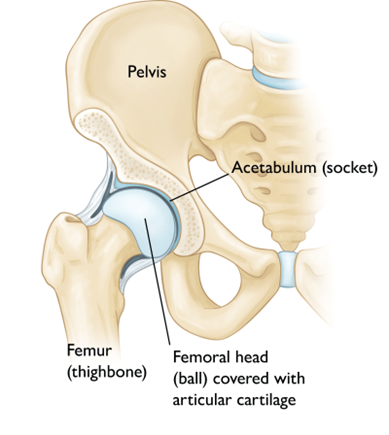
The Hip joint is a ball and socket joint which connects the thigh bone (Femur) and Pelvis, allowing for smooth movement and weight baring activity, such as walking. When the joint becomes inflamed it can cause pain and restriction of hip movement.
An intra-articular hip joint injection is a medical procedure in which a healthcare professional injects either a steroid, local anaesthetic or a combination of both directly into the hip joint using x-rays to guide them. This is different to an injection that you may have on the outer part of your hip to treat tendon pain. This injection does not need x-ray guidance so can be performed either in clinic or in the radiology department.
Intra-articular hip joint injections may be advised if all other non-operative treatments have been unsuccessful at helping you manage your symptoms or to help the healthcare professionals diagnose a source of pain.
Purpose of Hip Joint Injections
In general, patients receive intra-articular hip joint injections for one of two reasons; to help manage their symptoms (Therapeutic) or to assist with a diagnosis (Diagnostic).
Steroid injections are used to help try reduce inflammation, which in turn aims to reduce the swelling and pain in the joint. The effect of the steroid injection may not occur immediately and can take a number of days or weeks before the pain relieving benefit is felt.
In some cases a local anaesthetic may be used. This aims to numb the nerves to the area inside the hip joint causing a painless sensation to occur. The benefit can be felt within 20-30 minutes of the injection being given. Local anaesthetics will only have a temporary effect.
What are the benefits of the procedure?
The temporary pain relief from a hip injection may help:
- Reduce pain and inflammation
- Participation in physiotherapy
- Delay the need for surgery
- Confirm a diagnosis
Please note, if there are severe degenerative changes within the hip joint, the Intra-articular injection will have limited benefit.
What are the risks of the procedure?
As with all procedures there are some possible risks, some of which are minor, but some can be more serious. Specific risks to this procedure include, but not limited to;
- Infection
- Bleeding
- Numbness to the area or down the leg
- Nerve or Blood vessel damage
- Worsening joint pain or symptoms
- Allergic Reaction or Facial Flushing
- Failure to improve symptoms
- Progression of Osteoarthritis
Please note, if you are currently taking any blood thinning medication (such as Warfarin), it might further increase the risk of bleeding, therefore may need to be stopped 5-7 days prior to the injection.
How long will I be in hospital?
The procedure is usually carried out as a day case, either in Theatre or the X-ray Department. This means that you will usually be in hospital for half a day.
Preparation for the Injection
In order to help reduce the risk of infection it is important to keep the skin clean and free from open wounds. Please use the antimicrobial wash (Octenisan) 5 days leading up to your injection.
Please check to see if you need to stop any medication prior to attending the hospital.
What to expect on the day of the procedure
On arrival you will be seen by the Practitioner or Doctor carrying out the procedure who will discuss the procedure with you. If you have not done so already you will be asked to sign a consent form and a small arrow is drawn on the skin close to the injection site.
X-rays will be taken during the procedure. The injection itself only takes a few minutes, but the overall procedure may take approximately 20 minutes. The Practitioner or Doctor will use x-ray guidance (fluoroscopy) to direct a needle into the hip joint. Placement of the needle is then confirmed with the use of a contrast dye. Once correct placement is confirmed the injection solution is slowly administered. Following the injection a small dressing will be applied to the area.
Once the procedure is completed you will be monitored for approximately 20-30 minutes. You will then be discharged with an advice leaflet. You will be unable to drive home after the procedure so it will be necessary for you to make arrangements for transport home. It is advisable to avoid excessive exercise involving the joint for 24 hours following the procedure. It is advisable to continue to take pain relieving tablets until the injection begins to take effect.
The amount of pain relief and the length of time it lasts is different for everyone. After a period of time an injection may be repeated, but this decision is at the discretion of the Consultant team.
Some Consultants may want to avoid proceeding with hip replacement surgery for 3-6 months following an intra-articular hip injection.
When to seek medical attention
We would advise you to seek medical help if you experience any of the following after the injection:
- High fever
- Swelling
- Redness and/or drainage from the injection side
- Severe pain.
Follow up
The follow up plan is different between each Consultant. You will either be seen face to face in the Orthopaedic Clinic or receive a telephone appointment after the injection to re-assess your symptoms and make a plan of future management.