
Proximal Humerus Fracture
You have been diagnosed with a proximal humerus fracture. This leaflet is to provide you with advice and guidance following your recent discharge from hospital.
What is it?
Your shoulder is a very mobile joint made up of your shoulder blade (scapula) and upper arm bone (humerus). A proximal humerus fracture means that it is broken up near the shoulder joint. These fractures can take between 6 – 12 weeks to heal.
Wearing a Collar and Cuff
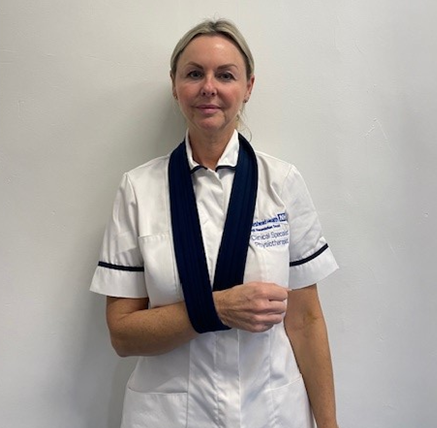
You have been advised to wear a collar & cuff to support the weight of your arm and allow the soft tissues and fracture to heal. It should be worn at all times and you should wear it when you are in bed. You will be advised by the orthopaedic team in fracture clinic when you are ready to start weaning from this. It is important to move your elbow, wrist and hand frequently whilst you are wearing the collar and cuff to prevent stiffness and maintain circulation.
Sleeping
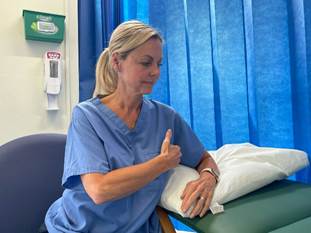
You may find it more comfortable sleeping in an upright position, gradually lying flatter as your pain settles. Place a pillow behind your shoulder and elbow for comfort. Avoid lying on your arm in bed.
Analgesia
It is important to discuss pain medication with your hospital doctor or GP, as you may require regular pain relieving tablets until the pain improves.
Washing and dressing
Wash underneath your armpit and elbow to prevent these areas from becoming sore. Sitting down is usually best as you can support your arm on a pillow while it is out of the collar and cuff.
You may find it easier wearing loose fitting clothes with front fastenings. Always dress your painful arm first, when undressing take your painful arm out last.
Things to do
Please remove rings and watches from your arm as soon as possible after the injury, your hand and fingers might swell.
Make an effort to move your wrist and fingers whilst you are wearing the sling, to prevent stiffness and to maintain your circulation. Exercises to do are below.
Exercises
Gradually start exercises, be guided by discomfort.
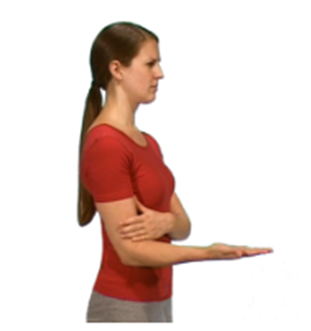
Begin by rotating your forearm in the collar and cuff. You can support your forearm with your other hand. Turn the palm to the ceiling and then to the floor as pain allows.
Complete all exercises 4-5 times per day, 5-10 repetitions each.
Exercise within pain levels
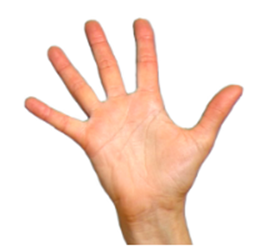
Open and close your fingers, making a fist then relaxing your hand
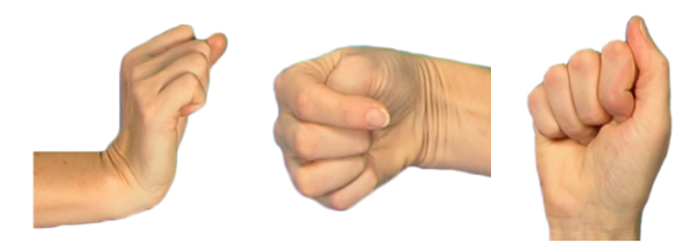
Gently move your wrist backwards and forwards
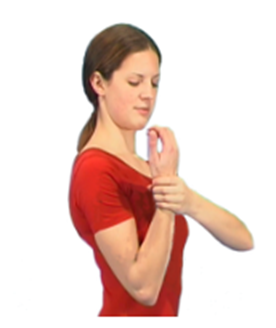
Remove your sling and gently bend and straighten your elbow whilst supporting your forearm.
Follow up
Following discharge from hospital, you may be given an appointment to attend fracture clinic. If you are expecting an appointment and you have not received anything, please contact the ward you were discharged from via the main switchboard on: 0191 482 0000.
Precautions
- Please do not lift or carry any objects in your hand.
- Please do not attempt to drive with your arm in the sling. You will be advised when you can return to driving by the orthopaedic team.
- Feeling ‘low’ can be common after this type of injury. You could discuss your feelings with a friend or relative, alternatively you can discuss any concerns with your GP.
Important
If you notice any of the following, please discuss with the orthopaedic team.
- Pain that is getting progressively worse
- Prolonged pins and needles or numbness in the arm (altered sensation)
- Fingers or hand turning cold and clammy or blue
- Severe swelling in the upper limb or hand
Telephone Numbers
| Ward-contact Level 3, Peter Smith Surgery Centre, Queen Elizabeth Hospital | 0191 445 2028 |
| During the hours of 08:00-16:30 contact the Physiotherapy Department | 0191 445 2320 |
| Main Switchboard | 0191 482 0000 |