Anatomy of the elbow joint
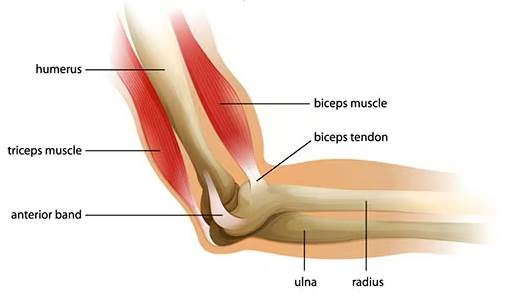
The elbow is made up of three bones; the humerus, the radius and the ulnar. It is what we call a “hinge joint”. The joint is held strong by a capsule, ligaments and Duscles.
How is a fracture treated?
Treatment depends on the amount of disruption there is to a bone. If there are many fragments or it causes joint instability, surgery may be performed to stabilise the bone back together, often followed by an application of plaster cast or a sling. If the fracture is well-aligned, surgery may not be required, and plaster cast applied.
Pain
Fractures can be very painful. If you have been prescribed painkillers take them as advised and this will help you manage the pain. If the pain becomes severe or constant you should consult your GP.
Swelling
You may notice swelling in your arm, wrist or hand. Keeping your arm elevated when at rest, will keep swelling down.
What can I expect after the plaster is removed?
Pain, swelling, stiffness dry skin and weakness are frequent symptoms experienced after your plaster is removed. Pain can be eased with painkillers, you can get advice from your pharmacist, GP or consultant regarding this.
Pain
The pain that you experience once the plaster is removed may last for 6 weeks, but once mobility is back within the elbow pain should improve.
Swelling
Ice or heat may also help reduce your pain. Heat can be applied with a hot water bottle (not boiling water) or a wheat pack wrapped in a towel. Ice may be applied by placing a bag of frozen peas in a damp towel. Either can be applied for 15-20 minutes up to 4 times a day.
You may notice that you have swelling once the plaster is removed. Elevating the arm above your heart level can help reduce swelling. It is normal for you to experience stiffness after your plaster is removed, again this can persist for several weeks/months. Following the appropriate exercise programme from the physiotherapist can ease this.
Stiffness
You can start to gradually increase activity after plaster is removed unless you have been advised otherwise.
You may notice a lump or bump at your elbow. This is part of the healing process as extra bone is laid down to heal the fracture. With time this is often re-absorbed although it may always be evident.
Dry Skin
Often people find that their skin is dry and scaly once the plaster is removed. By massaging a simple moisturiser or to your skin it will help to improve.
Weakness
Once the plaster is removed you will notice that your arm is weaker than your other side. It is importance to start your exercises as soon as possible, to increase movement and slowly regain your strength.
Please avoid heavy lifting or contact sports for 3 months following your fracture.
It is important to remember that all these things are normal after your plaster has been removed.
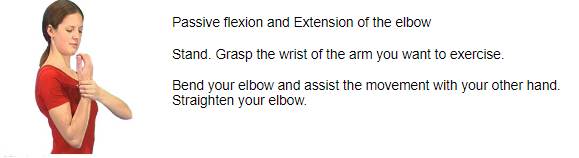
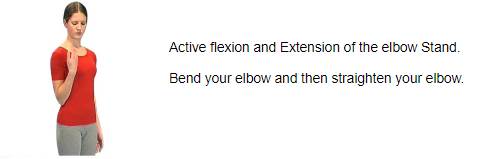
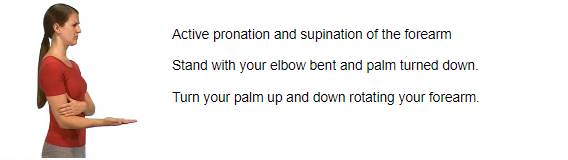
Elbow exercises
Try to move your elbow at the level you feel comfortable and at a level of pain you can manage.
It is good to hold the stretch for 20-30 seconds, but to begin with, even holding it for a few seconds will help. Repeat up to 10 times, starting at a number you are comfortable to do.
Choose one exercise from each section.