
Images of Diverticular disease
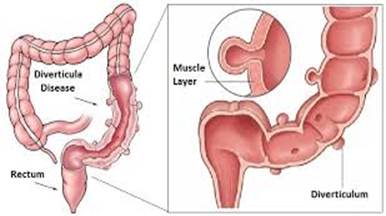
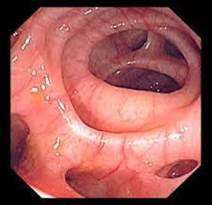
Diverticula
Diverticula is the medical term used to describe the small bulges that stick out of the side of the large intestine (colon).
Diverticula are common and associated with ageing. The colon becomes weaker with age, and the pressure of hard stools passing through the large intestine is thought to cause the bulges to form.
It’s estimated that 5% of people have diverticula by the time they are 40 years old, and at least 50% of people have them by the time they are 80 years old.
Diverticulosis, diverticular disease and diverticulitis
Diverticulosis
The majority of people with diverticula will not have any symptoms; this is known as diverticulosis.
Diverticular disease
1 in 4 people who develop diverticula will experience symptoms, such as abdominal pain. Having symptoms associated with diverticula is known as diverticular disease.
Diverticulitis
Diverticulitis describes infection that occurs when bacteria becomes trapped inside one of the diverticula (bulges), triggering more severe symptoms.
Who is affected?
Diverticular disease is one of the most common digestive conditions.
Both sexes are equally affected by diverticular disease and diverticulitis, although the condition is more likely to appear at a younger age (under 50) in men than in women. Overall, symptoms of diverticulitis are most likely to occur in people over 70 years old.
Diverticular disease is often described as a “Western disease” because the rates are high in European and North American countries, and low in African and Asian countries.
A combination of genetics and diet is thought to be the reason for this and the fact that people in Western countries tend to eat less fibre.
People aged 50-70 who eat a high-fibre diet (25g a day) have a 40% lower chance of admission to hospital with complications of diverticular disease – compared to others in their age range with the lowest amount of dietary fibre.
Symptoms of diverticular disease include:
- lower abdominal pain
- feeling bloated
Symptoms of diverticulitis tend to be more serious and include:
- more severe abdominal pain, especially on the left side
- high temperature (fever) of 38C (100.4F) or above
- diarrhea or frequent bowel movements
Factors that appear to increase your risk of developing diverticular disease include:
- smoking
- being overweight or obese
- having a history of constipation
- use of non-steroidal anti-inflammatory drugs (NSAIDs) painkillers, such as ibuprofen or naproxen
- having a close relative with diverticular disease, especially if they developed it under the age of 50
Exactly how these lead to developing diverticular disease is unclear.
Treating diverticular disease and diverticulitis
A high-fibre diet can often ease symptoms of diverticular disease, and paracetamol can be used to relieve pain – other painkillers such as aspirin or ibuprofen are not recommended for regular use, as they can cause stomach upsets. Speak to your GP if paracetamol alone is not working.
Mild diverticulitis can usually be treated at home with antibiotics prescribed by your GP. More serious cases may need hospital treatment to prevent and treat complications.
Surgery to remove the affected section of the intestine is sometimes recommended if there have been serious complications, although this is rare.