
Your doctor has recommended a procedure called chest drain insertion. This leaflet has been written to help you understand what this means, what it involves and what you can expect after the procedure.
What is a chest drain?
A chest drain is a small flexible tube that is inserted into the space around the lungs to drain fluid or air.
Why do you need a chest drain?
Fluid and/or air has collected in the space around your lung which is stopping the lung from working properly and making you short of breath. This is called a pleural effusion (collection of fluid) or pneumothorax (collection of air). The chest drain allows us to remove this fluid and/or air.
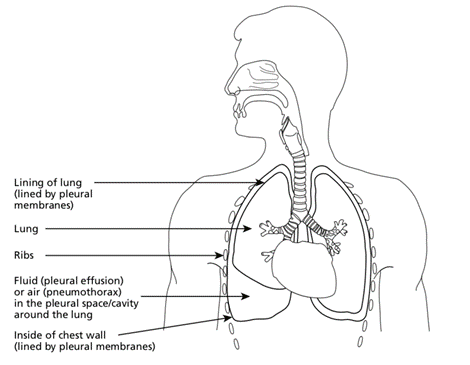
How does a chest drain work?
Once inserted we connect the chest drain (the small tube) to a drainage bottle containing a small amount of sterile water. The tube allows the air or fluid in your chest to escape and the water acts as a seal, preventing air from coming back up the tube and into your chest.
How long does the drain stay in position?
This varied from person to person and depends on the medical problem. This can be as little as 24 hours or as long as a few weeks. However, in most people it’s around 3-5 days.
How is the drain put in?
You will then be asked to lie or sit in a comfortable position. The drain is usually put into the side of your chest, below your armpit. However, if you have a fluid build-up (pleural effusion) an ultrasound (jelly) scan of your chest is done first to decide on the best position for the drain. This is completely painless.
We clean your skin thoroughly with an antiseptic to minimise the risk of infection. This can feel cold. We then inject a local anaesthetic into the skin to numb or freeze the place where the tube will go. This can sting a little but stops quickly. The tube can then be inserted and stitched into place. A dressing is put over the skin to keep the area clean and the tube is attached to a drainage bottle to collect the fluid or allow the air to escape.
Will it be painful?
When your doctor inserts the chest drain they will use local anaesthetic to prevent you feeling pain while the drain goes in. You may feel a ‘pushing’ or ‘tugging’ sensation, but it should not be painful. At the end of the procedure your chest may feel ‘bruised’ or ‘sore’ for a few days, but this can be controlled with painkilling medication. If you experience any pain that isn’t controlled, we would like you to inform your nurse so that further pain relief can be provided.
How long does it take?
The procedure takes 20-40 minutes.
What are the risks?
In most cases, the insertion of a chest drain is a routine and safe procedure. However, like all medical procedures, they can cause some problems.
- Any tubes that are inserted into the skin carry a small infection risk, around 1 in 100. These risks get more important the longer that the tube stays in place. Infection can usually be treated with antibiotics but may require a longer stay in hospital.
- Sometimes the drains can fall out. They are stitched in place and a dressing is applied to try and prevent this.
- Rarely the drains can become blocked preventing further drainage. If this happens we can try to unblock it but rarely we need to replace the chest drain.
- Very rarely, the insertion of the drain may cause accidental damage to a blood vessel or other organ and cause serious bleeding. This only affects around 1 in 500 patients. Unfortunately, if it does happen it is a serious problem which may require an operation to stop it.
- As discussed above some people can experience pain or discomfort. This is usually controlled with painkilling medication.
- Sometimes if the underlying cause is cancer, some cancer tissue can affect the area where the drain was inserted. Please let your doctors know if you develop a lump, or any pain at the site. If this problem does develop your doctor will advise you on appropriate treatment.
What if I take blood thinning tablets/injections?
If you take clopidogrel/Plavix, aspirin, warfarin or one of the new blood thinning tablets such as rivaroxaban or apixaban please tell your doctor who will discuss a personalised plan for these prior to the procedure.
Is there anything I need to do to look after the drain?
Whilst the drain is inserted you will need to take extra care to not dislodge the tube.
- You can walk around the ward, but you will need to take the drainage bottle with you. This must always be kept below the waist to prevent fluid draining the wrong way into your chest.
- When sat down or in bed please leave the bottle on the floor.
- Do not swing the bottle from the tubing.
- If the drain becomes detached, you accidently knock over the bottle or you are worried you may have pulled on the drain, please inform a nurse straight away.
- We do not recommend leaving the ward with a drain when you go for x-rays or other tests away from the ward a member of staff will accompany you to help care for the drain.
- You can usually wash with assistance in the shower, but it may be easier to have a wash with a bowl of water at the bedside for a few days.