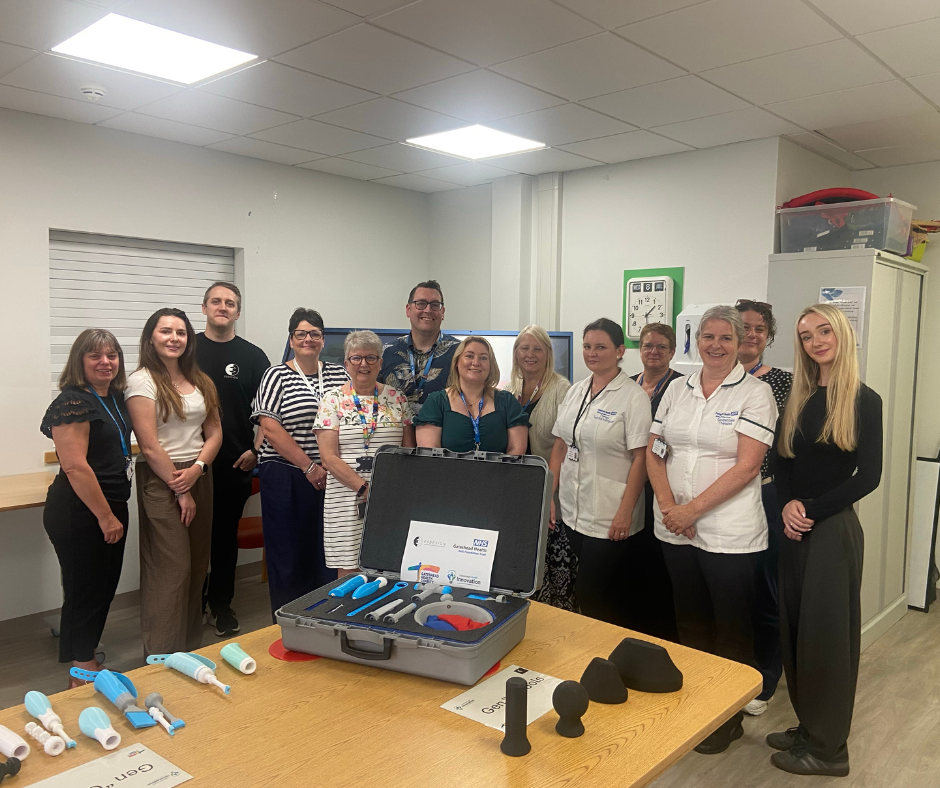
Gateshead Health NHS Foundation Trust is leading the way in stroke rehabilitation after a suite of innovative handheld tools were developed to support patient recovery.
Prototyped by local company E3 Design in collaboration with occupational therapists from JASRU (Jubilee Acute Stroke and Rehabilitation Unit) and Innovation Manager Conor O’Neill, the tools were created following direct feedback from staff and patients alike.
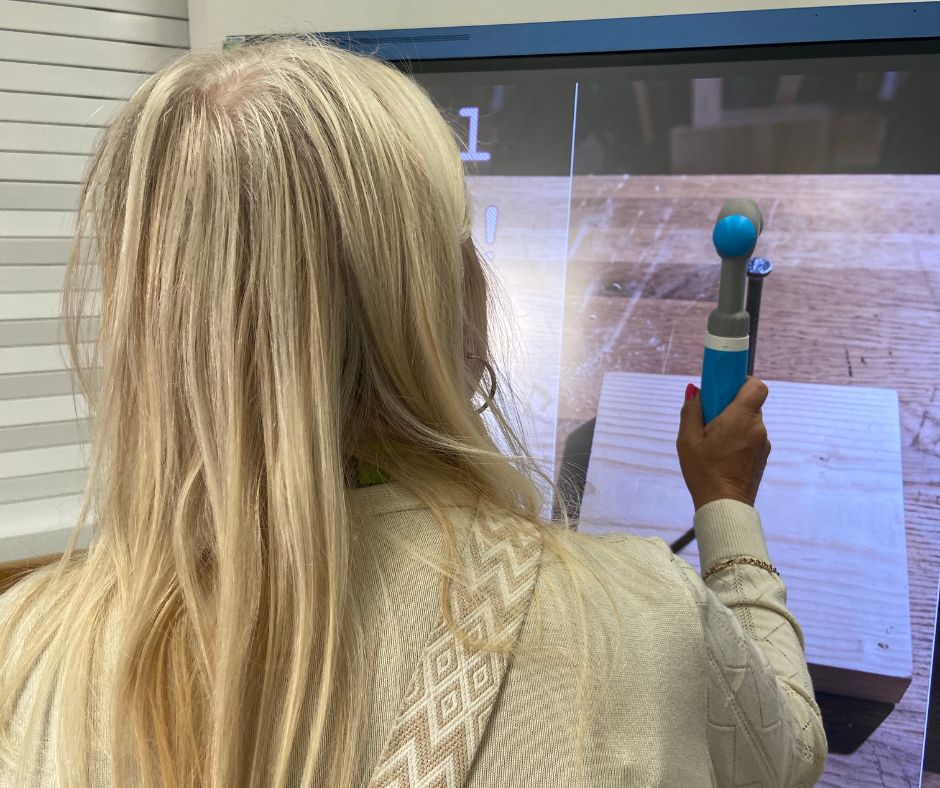
Designed to replicate everyday activities such as DIY and cooking, the tools have been developed to interact with software on a giant interactive touchscreen to support rehabilitation goals. This enables a more inclusive therapy experience that accelerates progress and boosts patient confidence during what can be an incredibly difficult recovery journey.
The decision to base the tools on everyday activities is crucial. Stroke recovery relies heavily on repetitive task practice, but abstract exercises can feel disconnected from real life and quickly become demotivating. By mimicking these familiar tasks, the tools give patients a clear functional purpose for every movement.
Dr Ruth Da Silva (PhD), is a Clinical Specialist Occupational Therapist at the QE and has witnessed firsthand the incredible impact the interactive tools are having on stroke patients. “We were just finding we were a little bit limited in terms of what we could offer”, said Ruth.
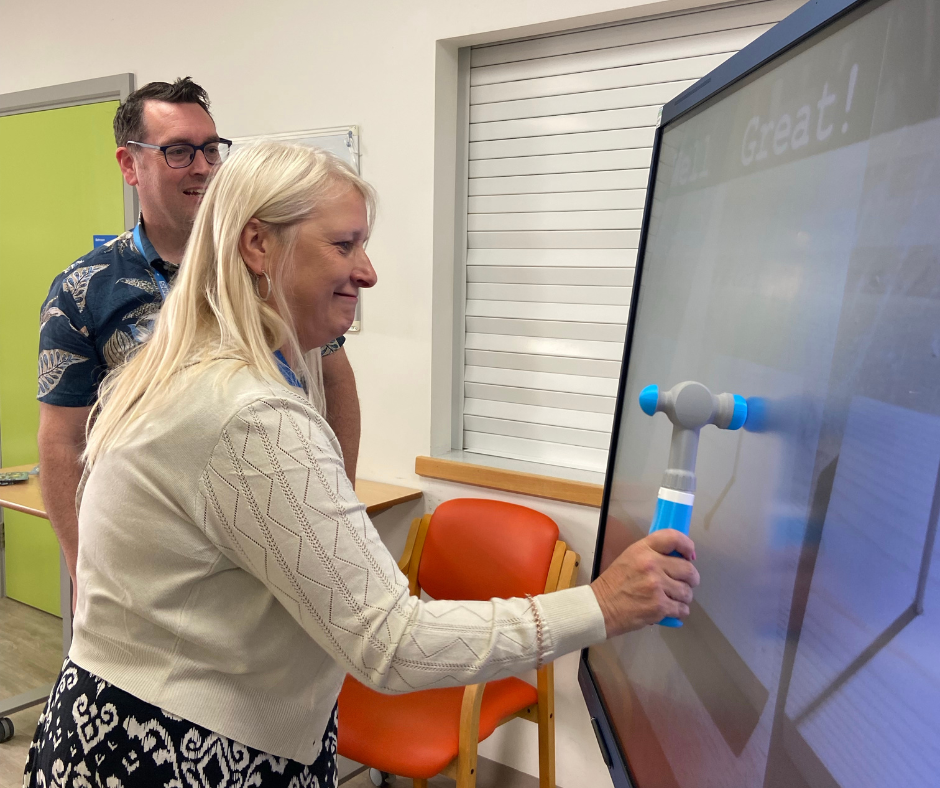
“In recovery of the hand after stroke, patients are aiming for lots of repetitive task practice, and that means doing a lot of the same movement repeatedly which can become a little bit monotonous.
“The difference now, with the tools, is that we have another option to make that repetitive task movement a little more relevant to everyday activities. It helps patients to understand what they’re doing the practice for, that it’s related to a functional task that they can practice when they’re at home.”
“One of the tools we’ve got is for painting a fence. We had a patient recently who used this tool, and he found it really rewarding.
“It linked in with his roles at home and the types of activities he felt because of the stroke, he would probably have to give up on being able to do. Patients sometimes lose sight of the end of the rehab journey but it gave him a little more hope for the future.”
Gateshead Health Charity supports projects that aim to provide additional resources for patients and staff, facilitate staff training and development, acquire essential medical equipment, and contribute to medical research.
“It’s really nice to know that we can tap into funds that will help us to expand our role and what we can offer patients.
“We’re always aware of the limitations regarding funding so it’s been really nice to be able to bring something new and to actually be involved in developing those ideas.”
Beyond the benefits for patients, Ruth also revealed how the tools are transforming how staff deliver care. “We’re quite limited with resources so it’s being able to use technology to widen the options we can provide for patients.
“It opens up opportunities where we can treat more patients at the same time. We can be setting up patients with the clever touchscreen, while attending to a different patient who might need more one to one care.”
Conor O’Neill, Innovation Manager at Gateshead Health NHS Foundation Trust commented: “This is a great example of how you take a very simple idea all the way through to a product that is ready for commercialization.
“The whole iterative cycle of taking it from that initial idea, moving it through to design iterations, getting patient feedback, getting staff feedback, getting support within the Trust for this is what innovation is all about. It’s about moving these ideas forward, taking these unique concepts and bringing them to life.”
Gateshead Health Charity Manager Clare Drummond says that she is proud to be part of a team that enables patients to receive the best possible healthcare. “Thanks to the generosity of our donors and supporters, we are one of the first trusts in the country to offer the innovative handheld tools.
“Without them this wouldn’t be possible and we can continue to go above and beyond NHS core funding can provide.”